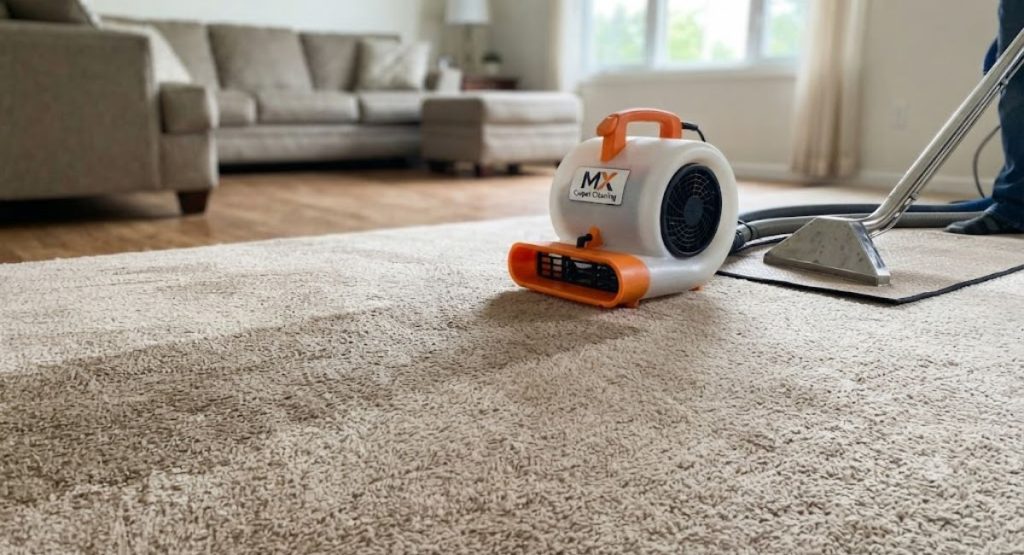
Most carpets take 6 to 12 hours to dry after a professional hot water extraction cleaning, and closer to 1 to 3 hours after a lower-moisture method like encapsulation or bonnet cleaning. Where you land in that range depends on the cleaning method used, the humidity in your home, how much airflow the room gets, and how thick your carpet is.
If you just had your carpets cleaned and you’re standing on a slightly damp floor covering if that’s normal, it is. A carpet that’s cool and a little moist to the touch for several hours afterward is expected. A carpet that’s still soaked the next day, or starts to smell musty, is a sign something needs attention, whether that’s the humidity in the room or the cleaning itself.
How Long Does Each Carpet Cleaning Method Take to Dry?
The cleaning method has more influence on drying time than almost anything else. Here’s how the main methods compare:
| Cleaning Method | Typical Drying Time | Moisture Used | What It’s Good For |
| Hot water extraction (steam cleaning) | 6–12 hours | High | Deep cleaning, allergens, ground-in dirt |
| Carpet shampooing | 6–10 hours | High | Heavy staining (less common today) |
| Bonnet cleaning | 2–4 hours | Low to moderate | Surface refresh, commercial carpet |
| Encapsulation / dry compound cleaning | 1–3 hours | Low | Fast turnaround, light maintenance cleans |
Hot water extraction is the method most professional carpet cleaners lean on, including services like MX Carpet Cleaning and it’s the process most carpet manufacturers require to keep stain warranties valid. It flushes hot water and cleaning solution deep into the fibers and padding, then pulls almost all of it back out with a powerful vacuum. That deep clean is exactly why it takes longer to dry than a surface-level method. Dry and low-moisture methods finish faster, but they’re cleaning the top of the fiber, not what’s worked its way down into the pile and backing.
What Actually Determines How Fast Your Carpet Dries
Humidity Is the Biggest Factor
Carpet dries through evaporation, and evaporation slows down the more moisture is already sitting in the air. In dry air, a carpet can be dry to the touch in 4 to 6 hours. In a humid room, the same carpet can stay damp for 24 hours or more, even after a good cleaning.
Airflow
Moving air pulls moisture off carpet fibers faster than still air ever will. A room with a ceiling fan running, a couple of windows cracked (when it’s not humid outside), or a box fan pointed at the floor dries noticeably faster than a closed-up room with no air movement at all.
Carpet Pile, Padding, and Thickness
Not every carpet holds water the same way:
- Low-pile and commercial-grade carpet dries fastest
- Berber and looped styles hold a moderate amount
- Thick, plush, or shag carpet, and any carpet over dense padding, holds the most water and dries slowest
A carpet can feel dry on the surface within a few hours while the padding underneath is still wet. That’s usually where a musty smell comes from if it doesn’t get the chance to fully dry out.
How Soiled the Carpet Was Before Cleaning
Heavily soiled carpet needs more passes, more water, and more extraction to get clean, which leaves more residual moisture behind afterward. If it’s been a couple of years since the last deep clean, plan on drying time running toward the longer end of the range.
Equipment and Technician Experience
This is the one homeowners tend to underestimate. A truck-mounted extraction unit pulls far more water out of the carpet than a portable rental machine, and an experienced technician knows how to avoid over-wetting in the first place. Two companies can use the exact same cleaning method and still leave you with very different drying times, purely based on equipment quality and how carefully the job was done.
Realistic Carpet Drying Times to Expect
| Scenario | Drying Time |
| Best case (low humidity, good airflow, thin carpet) | 4–6 hours |
| Typical (moderate humidity, average airflow) | 6–12 hours |
| Slow case (high humidity, thick carpet, low airflow) | 12–24+ hours |
If you’re cleaning ahead of something specific, guests coming over, furniture going back in, plan around the longer end of the range instead of the best case.
How to Speed Up Carpet Drying After Cleaning
- Turn on ceiling fans right after the cleaning is finished
- Point a box fan or two at the damp area, especially corners and under furniture
- Open windows only if the outdoor air is actually drier than what’s inside
- Run a dehumidifier, particularly in summer or in rooms with poor ventilation
- Set your HVAC fan to run continuously for a few hours instead of cycling on and off
- Keep pets and heavy foot traffic off the carpet until it’s dry
- Hold off on putting furniture back until the carpet is fully dry, or slide foil tabs or coasters under the legs if you can’t wait
- Skip cranking the heat as a shortcut. Hot, humid air doesn’t dry carpet the way moving air does, and it can encourage mildew if the room stays closed up
Mistakes That Slow Carpet Drying Down
A few habits make drying take longer than it needs to:
- Closing all the windows and doors right after cleaning, which traps humid air in the room
- Walking on the carpet in shoes, which pushes dirt and moisture deeper into the fibers
- Re-cleaning a stubborn spot before the area has fully dried, which just adds more moisture on top of what’s already there
- Using a rental machine with weak suction, which leaves more water behind than a professional extraction unit would
When Can You Walk on Carpet After Cleaning?
- Light foot traffic (clean socks or slippers): okay after about 4 to 6 hours
- Heavy foot traffic or pets: wait at least 12 to 24 hours
- Moving furniture back into place: wait a full 24 hours if you can, to avoid indentations, rust rings from metal legs, or trapping moisture underneath
Walking on damp carpet too soon does two things: it pushes moisture deeper into the pad, and it tracks in dirt from other floors that sticks to wet fibers far more than it would to dry ones.
Carpet Drying in Guelph: Why the Season Matters
Guelph sits in a humid continental climate zone with no real dry season, which matters more for carpet drying than most people expect.
Summer (June through August):
Relative humidity in the area often climbs close to 80% in early summer, and Guelph summers run warm and sticky. Opening windows to “air it out” often does very little on a humid July afternoon, since the outdoor air isn’t any drier than what’s already inside. A dehumidifier or air conditioning does more work than an open window during these months.
Winter (December through February):
Outdoor air is cold and carries less moisture, but Guelph winters still run humid overall, and a closed-up home traps that dampness. The upside is that forced-air furnaces naturally lower indoor relative humidity while they’re running, which can actually speed up drying indoors even though it’s damp and freezing outside. Keep the vents open in whichever room was just cleaned.
Spring and fall: usually the easiest window for fast, natural drying. Milder temperatures and lower humidity than peak summer mean a cracked window and a ceiling fan often get the job done without extra equipment.
Signs Your Carpet Needs a Professional, Not Just More Time
A little dampness for several hours is normal. These aren’t:
- Carpet that’s still soaked more than 24 hours after cleaning
- A musty or sour smell that shows up as it dries
- Dark spots or stains that seem to reappear or spread after the carpet dries (this is called wicking, where moisture pulls old stains back up from the padding)
- Any sign of mold or mildew, especially near baseboards or under furniture
Any of these usually points to trapped moisture in the padding or subfloor, which a fan and an open window won’t fix on their own.
How MX Carpet Cleaning Helps Your Carpet Dry Faster
Drying time comes down to how much water goes into the carpet and how much comes back out, so the equipment and technique used during the cleaning matter as much as anything you do afterward. Professional-grade extraction pulls significantly more moisture out at the source than a rented machine can, which shortens the drying window before you’ve even turned on a fan. If you’re in Guelph and want a cleaning that’s built around getting your floors dry and usable again as fast as possible, that’s what we focus on with every job.
Frequently Asked Questions
How long does carpet take to dry after professional cleaning?
Most carpet dries within 6 to 12 hours after hot water extraction cleaning, the most common professional method. Lower-moisture methods like encapsulation or bonnet cleaning can dry in as little as 1 to 3 hours.
Can I walk on my carpet while it’s drying?
Yes, in clean socks or slippers, once it’s been at least 4 to 6 hours. Hold off on shoes, pets, and heavy traffic until the carpet has had closer to 12 to 24 hours.
Why is my carpet still wet after 24 hours?
This usually means high humidity, poor airflow, thick padding, or a carpet that was over-wetted during cleaning. Run a dehumidifier or a fan directly on the area, and if it’s still not dry within another 12 hours, it’s worth calling the company that cleaned it.
Does Guelph’s weather affect how long carpets take to dry?
Yes. Humidity is the single biggest factor in drying time, and Guelph runs humid for most of the year. Summer cleanings usually benefit more from a dehumidifier or AC than from open windows, while winter cleanings tend to dry a bit faster indoors thanks to the drying effect of forced-air heating.
Final Thoughts
There’s no single number that answers “how long will my carpet take to dry,” because it genuinely depends on what method was used, how humid your home is, and how much air is moving through the room. What you can control is the airflow and humidity after the cleaning is done, and that alone can cut hours off the wait.
As a general rule, expect somewhere in the 6 to 12 hour range for a standard hot water extraction cleaning, plan for the longer end during a humid Guelph summer, and treat anything still soaked after 24 hours as a sign to check in with whoever cleaned it rather than something to wait out. A little patience and a fan pointed in the right direction usually gets you back to normal floors well within a day.