If you’re trying to figure out how to keep your carpets cleaning in Guelph, you’ve probably heard conflicting advice. One person swears by steam cleaning, another says dry cleaning is the way to go. The reality is simpler than it sounds: both methods work, but they’re built for different situations. The right choice depends on your household, your carpet type, and what you’re trying to solve.
Let’s break down exactly how each method works, when you’d use one over the other, and what actually matters when you’re deciding which professional carpet cleaner to call.
What Is Steam Cleaning?
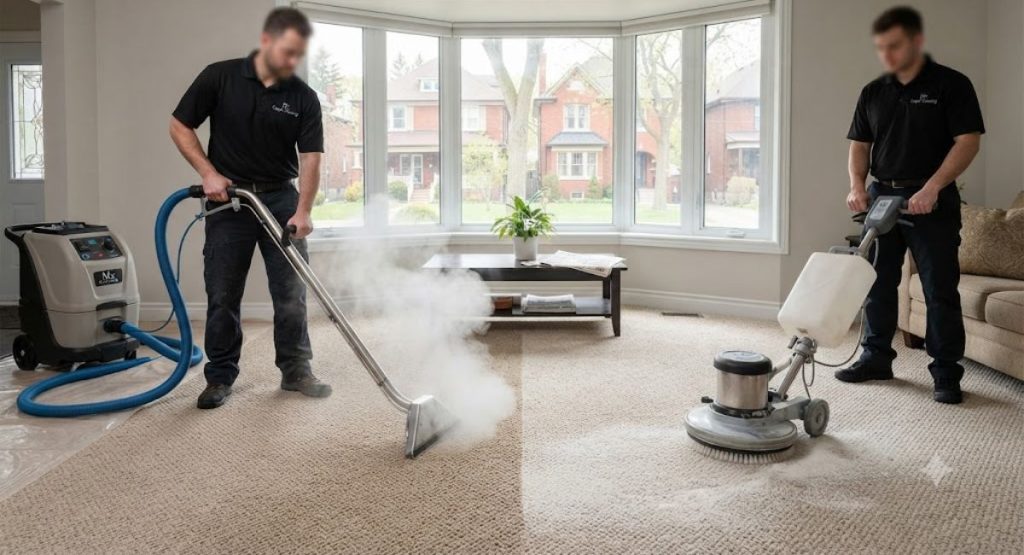
Steam cleaning, hot water extraction, is probably the most common professional carpet cleaning method you’ll encounter in Guelph and Southern Ontario. Here’s what happens: a machine heats water to a high temperature (usually 200+ degrees Fahrenheit), pumps it into your carpet along with a cleaning solution, and then immediately extracts it back out using powerful suction.
The process is straightforward. The hot water breaks down dirt, oils, and allergens trapped in carpet fibers. The extraction pulls out most of that dirty water along with whatever was dissolved in it leaving your carpet damp but cleaner. For most residential homes, this method removes about 95% of the contaminants from deep within the pile.
One thing worth knowing: despite the name, there’s not actually much steam involved. It’s the temperature and the cleaning solution that do the heavy lifting. The “steam” part is a bit of a misnomer that’s stuck around in the industry.
What Is Dry Carpet Cleaning?
Dry cleaning uses minimal water often just 5-15% moisture compared to steam’s 40-60%. Instead, it relies on chemical compounds, usually powders or special cleaning solutions, that attract and break down soil without needing hot water extraction.
The typical process goes like this: a cleaning powder is applied to the carpet, left for a few minutes to absorb dirt particles, then vacuumed up completely. Some dry cleaning methods use low-moisture solutions that are applied with specialized equipment, working similarly to steam but with far less water involved.
The big advantage here is drying time. Your carpet can be ready to walk on in 1-2 hours instead of the 6-24 hours steam cleaning typically requires. That’s a real benefit if you have pets, kids, or just can’t have wet carpet sitting around.
Steam Cleaning: Pros and Cons
Pros:
Steam cleaning is deeply effective for high-traffic areas and homes with pets or kids. If you’re dealing with ground-in dirt, pet odors, or allergens (dust mites, pet dander, pollen), hot water extraction gets results that dry methods simply can’t match. The heat actually kills bacteria and dust mites, which matters if anyone in your home has allergies or asthma.
For Guelph homeowners dealing with winter salt residue tracked inside, steam cleaning extraction power is particularly valuable. Salt sits in carpet fibers and can damage them over time if not properly removed. Hot water extraction literally pulls it out.
The method works on virtually any carpet fiber, including delicate wool and natural fibers. It’s also what the Carpet and Rug Institute recommends for carpet longevity professional extraction every 12-18 months keeps carpets lasting longer.
Cons:
The main drawback is drying time. Wet carpet stays vulnerable to mildew and mold if your home is humid or if it sits damp for too long. In summer heat or humidity, this can be genuinely annoying. You’re also looking at higher water usage and more powerful equipment needed.
Cost is typically higher than dry cleaning usually 30-50% more per room in the Guelph area. The equipment is more expensive to own and operate, which gets passed along to customers.
Dry Cleaning: Pros and Cons
Pros:
Quick turnaround is the headline benefit. Your carpets dry in 1-2 hours, meaning you’re not managing wet floors, worried about mold, or waiting around before you can move furniture back. If you have a busy household or commercial space, this matters.
Dry cleaning uses less water, which appeals to environmentally conscious homeowners. The lower moisture also means less shrinkage risk for certain carpet types and backing materials. And it’s gentler on some delicate or antique rugs that might not handle hot water well.
For spot cleaning between larger cleanings, dry methods work well. They’re fast, low-hassle, and sufficient for surface dirt.
Cons:
Dry cleaning doesn’t penetrate as deeply as steam extraction. If you’re looking to remove ground-in dirt or old stains that have been sitting in the carpet for months, dry methods struggle. The cleaning power just isn’t there.
Pet owners often find dry cleaning doesn’t fully eliminate odors. Urine and other organic matter settles deep in the pile and padding, and surface-level cleaning won’t reach it. For pet homes, you typically need the extraction power of steam.
Allergen removal is limited. Dust mites and pet dander aren’t fully extracted the way they are with hot water. If anyone in your house has respiratory allergies, steam cleaning is the better choice.
Some dry cleaning products leave residue on the carpet if not properly applied or vacuumed. This can make carpet feel stiff or attract dirt faster. Quality matters here professional dry cleaners do this right; cheap DIY versions often don’t.
When to Choose Steam Cleaning
Choose steam cleaning if you have any of these situations:
Pet owners:
Especially if your pets spend most of their time indoors, steam’s extraction power tackles odors at the source.
Allergy sufferers:
The heat and extraction remove allergens more completely.
Heavy foot traffic:
High-traffic areas accumulate compacted dirt that steam cleans more effectively.
Regular deep cleaning:
Every 12-18 months, steam extraction is the standard professionals recommend.
Salt and grime buildup:
In Guelph winters, tracking salt and road residue indoors is unavoidable. Steam removes it thoroughly.
Stain history:
Older, set-in stains respond better to hot water and longer contact time with cleaning solution.
When to Choose Dry Cleaning
Go with dry cleaning if:
You need fast turnaround:
Damp carpets aren’t practical for your schedule or space.
Delicate fibers:
Some natural fibers can shrink or feel if exposed to too much moisture. A professional can assess this.
Between-cleaning maintenance:
For spot cleaning or light refreshing between deeper cleanings, dry methods are efficient.
Basement or moisture-prone areas:
If your carpet is in a damp space or humidity is already high, adding moisture from steam isn’t ideal.
Low budget:
Dry cleaning typically costs less upfront.
Commercial or high-traffic businesses:
Fast turnaround matters more than the deepest clean.
The Honest Reality for Most Guelph Homes
Here’s what most carpet professionals will tell you: the best approach for most households is a combination strategy. Use steam cleaning for your main living areas, bedrooms, and places where people and pets spend the most time. Steam cleans deeper and lasts longer between cleanings.
Use dry cleaning for spot maintenance, high-traffic hallways that need quick refresh between deep cleans, or areas where fast drying is non-negotiable.
For professional cleaning, aim for steam extraction every 12-18 months. This standard recommendation from the Carpet and Rug Institute keeps fibers healthy and extends carpet life by years.
If the budget is tight and you can only afford one method, choose steam. The deep cleaning and allergen removal are worth the drying time.
FAQs
How often should I get my carpets professionally cleaned?
The Carpet and Rug Institute recommends professional cleaning every 12 to 18 months for most homes. If you have pets, kids, or high foot traffic, every 6-12 months is better. In Guelph’s climate, winter brings extra salt and moisture concerns, so annual spring cleaning after winter helps prevent damage.
Can I use a rental steam cleaner from the store instead of hiring a professional?
Rental machines remove water but don’t have the suction power of professional equipment. They leave carpets wetter and don’t extract as thoroughly. Professionals have truck-mounted systems with 4-5 times the suction capacity, plus they know how to handle different fiber types and problem stains. The investment in professional cleaning pays for itself through carpet longevity.
Is steam cleaning safe for wool or delicate carpets?
Professional steam cleaning is generally safe for wool when done by someone trained in fiber care. The key is using the right temperature and solution for that specific fiber. Dry cleaning is a safer choice if you’re uncertain about your carpet type. Always ask your cleaner to confirm they’ve handled your carpet fiber before proceeding.
How do I know if I have mold growing under my carpet after steam cleaning?
Good ventilation during and after steam cleaning prevents mold. Open windows, run fans, and ensure moisture is extracted completely. If you notice a musty smell in the hours after cleaning, or visible mold within the next few days, the carpet wasn’t dried properly. Call back the cleaner immediately—it’s a sign something went wrong.
Why does my carpet feel stiff or sticky after dry cleaning?
happens when cleaning product residue isn’t fully vacuumed out or when the wrong cleaning solution is used. A professional cleaner should always ensure full removal of cleaning agents. If this happens, don’t wait—call them back to properly rinse or re-clean the affected area.
One method better for Ontario’s climate?
Steam cleaning handles Guelph winters better. The heat and extraction power remove salt and moisture tracking that regular dry cleaning can’t tackle. Dry cleaning is fine for light maintenance in summer, but for seasonal deep cleans and winter protection, steam is the better choice for Southern Ontario homes.
Final Thoughts
Both steam and dry carpet cleaning have legitimate uses. Steam wins for deep cleaning, allergen removal, and getting the most life out of your carpet investment. Dry cleaning wins for convenience and speed when you don’t need a deep clean.
For most Guelph homeowners, the answer is simple: call a professional who offers steam cleaning every 12-18 months, and use spot cleaning or light maintenance between appointments. That approach keeps your carpets clean, healthy, and looking good for years.
The goal is picking the right tool for what you’re actually trying to solve. Now you know what each one does.